
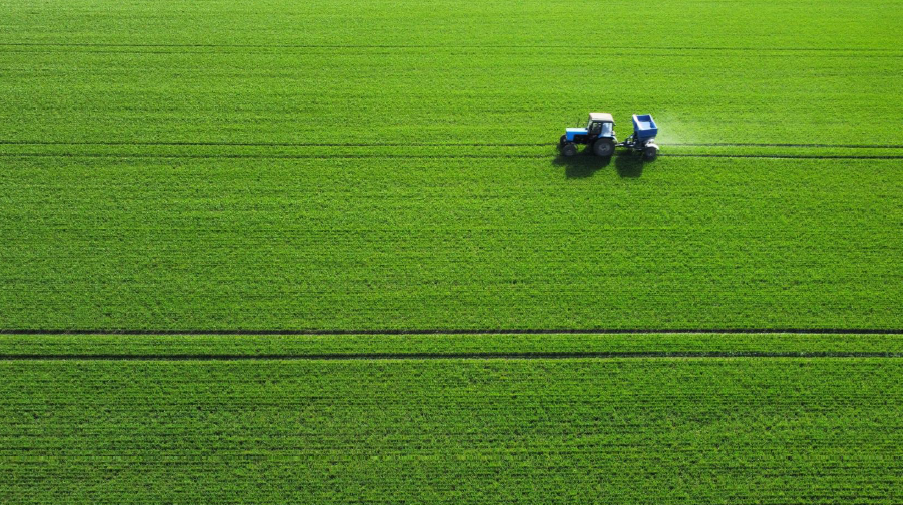
A 31% increase in fertilizer price over the past year. A projected shortage of ammonia of 6.8 million tons by 2029. Half of the world’s food production depending on it. The fertilizer market, long overshadowed by bigger geopolitical stories, has become one of the decade’s defining strategic issues. Arthur Hunt Strategy releases a new study breaking down the structural tensions reshaping this market.
A market under chronic pressure
The picture is stark: fertilizer demand keeps rising, driven by global population growth (nearly 9.7 billion people expected by 2050), soil degradation, shifting diets, and new industrial uses — lithium iron phosphate batteries chief among them.
Supply, meanwhile, remains rigid. Building an ammonia or urea production unit takes 4 to 7 years and billions of dollars in investment. The result: an estimated ammonia shortfall of 6.8 million tonnes a year by 2029 (excluding China).
Geopolitics at the table
The crisis that erupted in the Middle East in late February 2026 was a sharp reminder of the market’s fragility: nitrogen fertilizer prices jumped 31% year-on-year, and urea prices rose 43% in just three months. The geographic concentration of production — Russia, Qatar, and Iran for urea and ammonia; Morocco for phosphate; Canada for potash — exposes the entire global supply chain to political decisions and regional tensions, particularly around strategic chokepoints such as the Strait of Hormuz or the Suez Canal.
Three levers reshaping the market
Facing this structural instability, the study identifies three transformation dynamics at work:
– Regionalization of supply chains, driven by emerging production hubs (Nigeria, Mauritania) and by the European fertilizer plan announced in May 2026, which promotes organic and bio-based fertilizers produced in Europe.
– Agronomic efficiency, through the rise of biostimulants, biofertilizers, biocontrol products, and precision agriculture — while today only 20% of farmers worldwide use these solutions.
– Decarbonization of the sector, via green and blue ammonia, still marginal but growing, as fertilizers account for roughly 5% of global greenhouse gas emissions.
An issue that extends beyond agriculture
The consequences don’t stop at the farm gate: the World Bank estimates that a doubling of fertilizer prices could push food prices up by 10 to 20%. With only 40 to 60% of applied nitrogen actually absorbed by crops today, optimizing existing usage stands out as an immediate performance lever — alongside the long-term investments needed in new capacity.
Players who manage to produce more — or as much — with fewer inputs will hold a triple advantage: economic, environmental, and sovereign, in a market set to remain volatile for years to come.
Would you like to receive the full study by email ? Contact-us.